
 Call Us
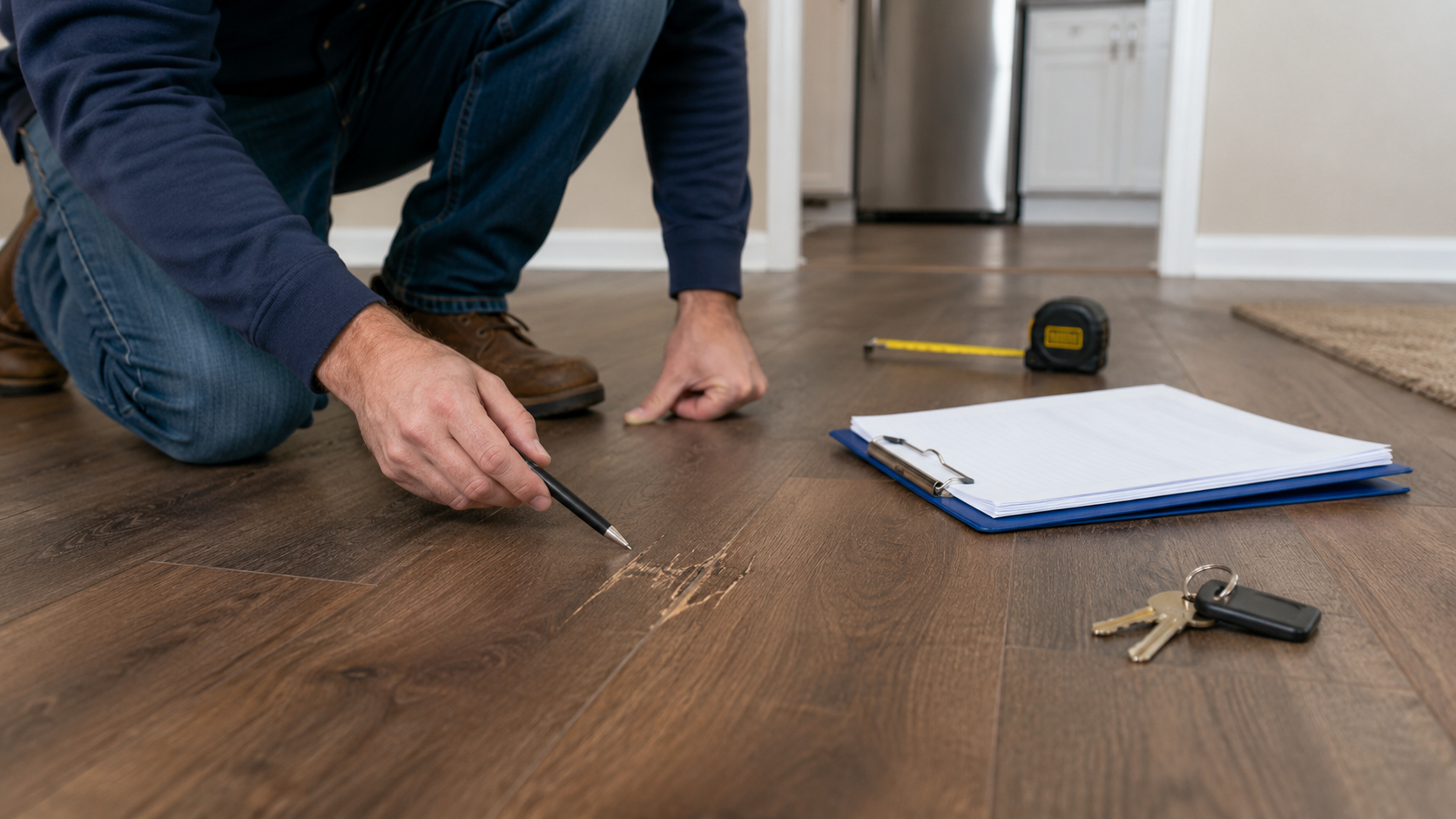
When a tenant causes damage beyond normal wear and tear, Oregon landlords and property managers often face an important question:
Can you charge the tenant for the full replacement cost of flooring, paint, or other damaged items?
In most cases, the answer is no.
The industry standard in Oregon is to prorate replacement costs based on the item's remaining useful life, ensuring charges are reasonable, well-documented, and compliant with Oregon security deposit laws.
This guide explains Oregon best practices for prorating security deposit deductions, particularly for flooring replacement, and how landlords can protect themselves from disputes and small claims litigation.
Oregon Security Deposit Law and Proration
Under Oregon's security deposit statute, ORS 90.300, landlords may deduct from a tenant's security deposit for:
Damage beyond ordinary wear and tear
Unpaid rent
Other amounts permitted by the rental agreement
However, landlords generally cannot charge tenants for the full replacement cost of items that have already depreciated over time.
Courts commonly reject security deposit deductions when landlords:
Charge 100% replacement cost for aging materials
Fail to account for depreciation
Use arbitrary or unsupported charges
Cannot explain how the deduction was calculated
Proration helps ensure that deductions remain fair, reasonable, and legally defensible.
Why Oregon Landlords Should Prorate Damage Charges
Proration prevents a landlord from receiving a financial benefit, often referred to as "betterment," by replacing an old item with a brand-new one at the tenant's expense.
A tenant should only be responsible for the portion of useful life that was lost due to damage.
For example, if a carpet was already nearing the end of its expected lifespan, the tenant should not be charged for the full cost of installing a new carpet.
Typical Useful Life of Rental Property Components
Although Oregon law does not provide an official depreciation schedule, many Oregon property management companies, insurers, and courts recognize the following useful-life standards:
Item | Typical Useful Life |
Rental-grade carpet | 5–7 years |
Vinyl plank flooring | 7–10 years |
Sheet vinyl | 7–10 years |
Laminate flooring | 10 years |
Hardwood flooring | 20–30 years |
Interior paint | 2–3 years |
Window blinds | 3–5 years |
Appliances | 8–12 years |
Best Practice: Use conservative useful-life estimates and apply them consistently across your rental portfolio.
How to Calculate Prorated Security Deposit Charges
Step 1: Determine the Item's Age
Establish the age of the damaged item using:
Installation invoices
Owner records
Property turnover documentation
Maintenance records
If the installation date is unknown, many property managers use a conservative estimate rather than assuming the item is new.
Step 2: Determine Expected Useful Life
Use an established useful-life schedule and apply it consistently across all properties.
Step 3: Calculate Remaining Useful Life
The standard formula is:
Remaining Useful Life ÷ Total Useful Life = Chargeable Percentage
Example: Carpet Replacement Calculation
Assume the following:
Replacement cost: $3,500
Useful life: 7 years
Age at move-out: 5 years
Remaining useful life: 2 years
Calculation:
2 ÷ 7 = 28.6%
Tenant responsibility:
$3,500 × 28.6% = $1,001
In this example, the maximum defensible security deposit charge would be $1,001, assuming the damage exceeds normal wear and tear.
Common Security Deposit Mistakes Oregon Landlords Should Avoid
Avoid these high-risk practices:
Charging full replacement cost for depreciated items
Ignoring age and useful life
Using arbitrary flat fees
Applying different standards to different tenants
Adjusting charges simply to match the security deposit amount
Classifying ordinary wear and tear as tenant damage
These mistakes frequently lead to disputes and unsuccessful claims in Oregon courts.
Documenting Prorated Damage Charges
Proper documentation is critical when deducting from a tenant's security deposit.
Your accounting should clearly identify:
Item replaced
Cause of damage
Total replacement cost
Age of the item
Expected useful life
Proration calculation
Final tenant charge
Sample Security Deposit Accounting Language
Carpet replacement due to pet urine damage exceeding normal wear and tear.
Installed June 2019 (5 years old).
Expected useful life: 7 years.
Replacement cost: $3,500.
Prorated tenant charge based on remaining useful life: 2/7 = 28.6%.
Tenant responsibility: $1,001.
Clear explanations like this often help prevent disputes before they escalate.
What Oregon Judges Look for in Security Deposit Disputes
When reviewing a security deposit case, courts typically evaluate four key factors:
Was the damage beyond ordinary wear and tear?
Was the item already depreciated?
Is the amount charged reasonable and proportional?
Is the calculation transparent and supported by documentation?
When landlords can answer "yes" to all four questions, their deductions are generally more defensible.
Property Management Best Practices for Oregon Rentals
Professional property management companies in Oregon commonly:
Maintain standardized depreciation schedules
Track installation dates for flooring and major components
Train staff on wear-and-tear standards
Default to prorated damage calculations
Use consistent security deposit accounting procedures
Document all charges thoroughly
These practices reduce disputes, chargebacks, and small claims court exposure.
Oregon's 31-Day Security Deposit Deadline
Even a properly calculated deduction can become problematic if delivered late.
Under Oregon law, landlords must provide the security deposit accounting and any refund due within 31 days after tenancy termination.
Failure to meet this deadline may expose a landlord to additional liability, including potential double damages.
Final Thoughts: Oregon Security Deposit Proration Best Practices
Proration is widely recognized as the industry standard for security deposit deductions in Oregon.
To maintain fair and defensible charges:
Use reasonable useful-life estimates
Prorate replacement costs consistently
Document calculations thoroughly
Distinguish normal wear and tear from actual damage
Deliver security deposit accounting within Oregon's required timeframe
Following these best practices helps Oregon landlords and property managers protect their investments while reducing the risk of disputes and litigation.